A suit’s lining tells you little about whether its pattern was created for you. Comparing bespoke tailors in Birmingham starts with the service underneath the label: an individual pattern, an adapted base pattern or an altered ready-made garment. These five businesses are worth investigating for personalised tailoring, but their offers differ. The numbers organise the shortlist and do not represent a tested league table.
1. King & Allen
King & Allen’s Birmingham shop is on Kenyon Street, and its own location page distinguishes made-to-measure from fully bespoke. It describes the former as adapting an existing pattern and the latter as beginning with a unique one. That clarity gives you a useful first comparison.
Take a silhouette reference from Styles Notes tailoring ideas if it helps, then explain the fit problem you need solved. An uneven shoulder deserves more discussion than a preference for an unusual lining.
2. Colmore Tailors
Colmore Tailors lists its atelier at Imperial & Whitehall on Colmore Row. Its website covers suits and shirts alongside casual tailoring, including overshirts and outerwear. Consider it when the commission needs to fit a broader wardrobe rather than serve a single formal occasion.
Its process page is headed made-to-measure, despite wider use of bespoke language. Ask which pattern-making route applies to your order. For example, a client seeking a relaxed work jacket should discuss posture, layering and seated comfort before choosing the lapel shape.
3. Clements and Church
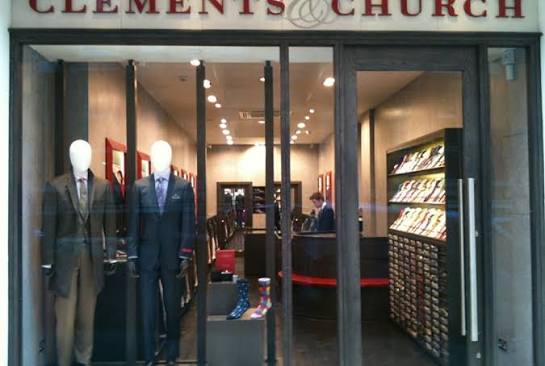
Clements and Church’s Birmingham flagship is on Church Street. Its website distinguishes its custom-made process from traditional bespoke and also discusses made-to-measure elsewhere. Specify the service in the quotation instead of treating those terms as interchangeable.
Collect outfit references through Outfit Reports tailoring references if useful, but bring your existing work shoes to the fitting. The trouser shape and jacket balance need to work with your actual wardrobe. Ask how the proposed construction answers your particular fit requirements before discussing decorative options.
4. A Hand Tailored Suit
A Hand Tailored Suit identifies its Birmingham showroom on Spencer Street in the Jewellery Quarter and operates by private appointment. Its own website states that individual paper patterns are created rather than simply adapting a pre-existing base. Establish the fitting stages and construction details for your chosen commission directly.
This is a relevant conversation if a standard jacket repeatedly pulls or twists on you. Show the problem using an existing garment. But don’t diagnose the correction yourself: describe what feels wrong and ask the tailor to explain the proposed solution.
5. Kensington Avenue
Kensington Avenue identifies Birmingham as a location for bespoke suits and ready-to-wear formalwear, while local listings place it in the Mailbox. That combination makes the distinction between a new commission and an adjusted stock garment particularly important to establish.
A look found while browsing Dress Updates formalwear ideas can communicate the occasion. Ask what you are actually ordering, which fittings are included and what the finished price covers. Don’t assume a fitting appointment on its own establishes that the garment will be individually patterned.
Pay for the process your body needs
Treat the first consultation as a technical conversation, not a fabric shopping session. Explain how often you’ll wear the suit, where you feel restricted in existing clothes and whether you sit for much of the day. Those answers should influence the proposal.
| Service to clarify | Pattern starting point | Question to ask |
| Ready-made with alterations | Existing finished garment | Which changes are possible? |
| Made-to-measure | Adapted base pattern | Which posture adjustments are included? |
| Individual-pattern commission | Pattern developed for the client | What fitting stages refine the shape? |
A useful rule is to spend time on recurring fit problems before decorative details. Think of cloth selection as the surface of a chair: appealing upholstery cannot correct a seat that leaves you uncomfortable. The analogy has limits, but it keeps the consultation focused on how the garment works.
Keep references from Closet Views suit inspiration separate from the written specification. Record the agreed service, fabric, fittings, alteration scope and delivery arrangements. Photographs explain taste; the specification records what you are buying.
If two example quotations were £900 and £1,200, the £300 difference would need explaining through the actual work and inclusions. Those are illustrative figures, not Birmingham prices. A higher total alone doesn’t establish a more individual pattern or more useful fitting process.
FAQs
Should I lose weight before commissioning a suit?
Discuss any expected change at the consultation. Ask when measurements should be finalised rather than ordering around a guessed future size.
Can a wedding party use different services?
Ask the tailor. The groom’s commission and attendants’ outfits need not follow an identical process, but cloth coordination and delivery must be agreed.
Is every fit issue visible in a mirror?
No. Sit, walk and reach during fittings, then describe pressure or restriction even if the front view looks tidy.
Request a written proposal before choosing cloth
Bring a frequently worn jacket, your intended shoes and a short description of the suit’s job. Ask each shortlisted tailor to explain the pattern method and fitting sequence in writing. Choose after you understand how that process addresses your fit, schedule and spending limit.